NEW: DOVETAIL MOBILE COMPUTING SOLUTIONS NOW AVAILABLERechargeable Wireless Emergency Light Systems Coming Soon HQ521 with Can Bus communications and Vehicle to Vehicle Light and Siren Synchronization.CELEBRATING 50 YEARS OF CANADIAN MANUFACTURINGNEW: DOVETAIL MOBILE COMPUTING SOLUTIONS NOW AVAILABLERechargeable Wireless Emergency Light Systems Coming Soon HQ521 with Can Bus communications and Vehicle to Vehicle Light and Siren Synchronization.CELEBRATING 50 YEARS OF CANADIAN MANUFACTURING
Detailed Comparison Of Full-Sized And Mini LED Light Bars
Key Takeaways
Full-sized and mini LED light bars differ in coverage, dimensions, installation, and suitability for different vehicles.
Full-sized bars suit vehicles requiring a broader warning-light presence.
Mini light bars offer compact installation and flexibility.
Buyers should evaluate vehicle type, operational requirements, mounting, power, durability, and applicable lighting regulations before selecting a solution.
What Are Full-Sized And Mini LED Light Bars?
What Is A Full-Sized LED Light Bar?
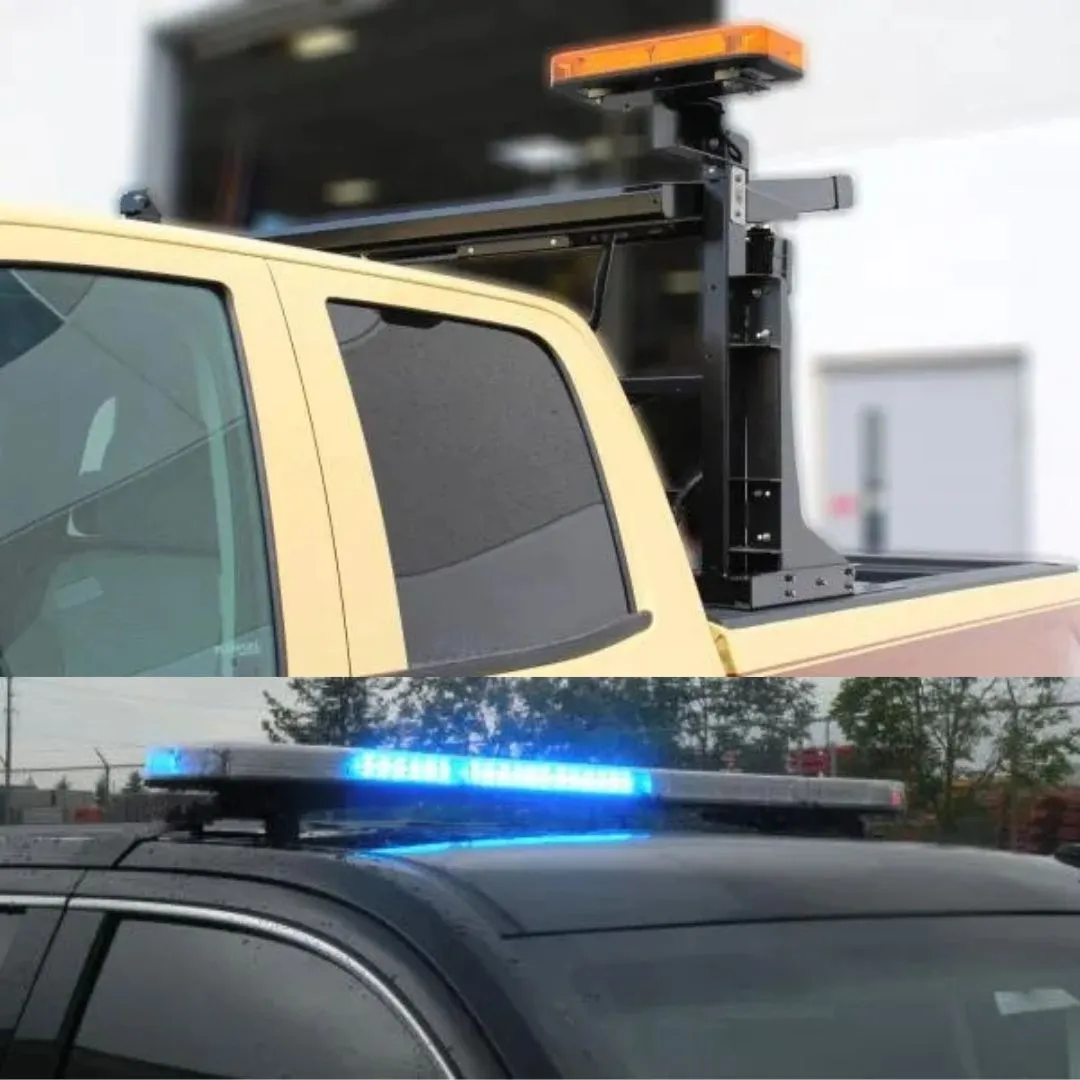
A full-sized LED light bar is a regular light bar used in emergency vehicles to alert other motorists on the road. The lights flash in particular patterns to facilitate clear visibility over long distances.
What Is A Mini LED Light Bar?
A mini LED light bar is also used to provide high visibility by mounting on the rooftop of the emergency vehicle. However, it is compact in design, making it easier to mount and maintain than a full light bar.
How Do Both Types Support Emergency And Fleet Vehicle Visibility?
Both full-sized and mini LED light bars support emergency and fleet vehicle visibility by providing bright, flashing light with the appropriate colour code based on the type of service. So in terms of utility, both are effective, but mini LED light bars strike a balance between visibility and convenience.
Full-Sized Vs. Mini LED Light Bars: Key Differences
Light Type
Physical Footprint
Roof Coverage
Vehicle Compatability
Mini LED Light Bars
Small and compact
Minimal coverage
Smaller utility vehicles
Full-Sized LED Light Bars
Large but more effective
Cover the entire roof width
Emergency first responder vehicles
Size, Dimensions, And Vehicle Coverage
In terms of size and dimensions, mini light bars are more compact than their full-sized counterparts. Full-sized light bars can cover the entire width of the vehicle’s roof, whereas the mini light bars only occupy a small area.
Brightness, Warning Visibility, And Light Distribution
Both mini and full-sized LED light bars have similar brightness. The difference, however, comes in the realm of visibility. While full-sized light bars are adept at providing 360-degree visibility by themselves, mini light bars might need auxiliary lighting for such comprehensive coverage.
Power Consumption And Electrical Requirements
In terms of net power consumption and electrical requirements, mini LED light bars have the upper hand as they have a lower amperage draw. Full-sized light bars have a higher power draw because of their dimensions and because they are connected to extra auxiliary channels.
Installation Complexity And Mounting Flexibility
Mini light bars are much easier to mount and install than their full-sized counterparts. This becomes extremely useful in cases where the vehicle changes function across seasons. This type of pattern can be observed in municipal vehicles. Therefore, installing and removing mini light bars is easier. In the case of emergency vehicles, however, that have a singular function throughout the year, this might not be a major consideration.
Durability, Maintenance, And Long-Term Ownership Costs
Both full-sized and mini light bars are highly durable to withstand harsh environmental conditions and constant vibrations emanating from the vehicle they are mounted on. There is a marginal difference in maintenance, as mini LED light bars have a simpler layout and fewer service points than a full-sized light bar. So the upkeep of full-sized light bars might require slightly more attention.
Mini LED light bars also have a lower overall cost of ownership initially. Full-sized bars, on the other hand, have a higher initial setup cost owing to higher LED counts, more complicated internal optics, and integrated controllers.
Advantages And Limitations of Full-Sized and Mini LED Light Bars
Key Advantages Of Full-Sized LED Light Bars
Full-sized LED light bars have a broader, 360-degree visual presence across the vehicle roofline. Hence, they are highly suitable for emergency vehicles that require extensive warning-light coverage. Additionally, it also has more potential for extensive lighting configurations, depending on the model.
Key Advantages Of Mini LED Light Bars
Mini LED light bars have a major advantage in terms of total footprint. They do not cover the entire roof of the vehicle, but are adept at warning other motorists and bystanders on the road of the vehicle’s presence. Thus, mini light bars benefits are invaluable for smaller vehicles and applications with spatial constraints.
These light bars also have simpler installation and overall lower ownership costs due to their design.
Limitations Buyers Should Consider Before Choosing Either Option
While both have their merits, there are also some drawbacks to consider. Mini light bars are not enough in applications where 360-degree coverage is needed, such as primary first responder vehicles. However, if space and clearance are important for a vehicle, a full-sized light bar might fall short. Therefore, a careful consideration of factors is required before making an informed choice.
Which Applications Suit Full-Sized And Mini LED Light Bars?
Vehicle Type
Recommended Light Bar Format
Primary Selection Consideration
Police, Fire, And Emergency Response Vehicles
Full-sized LED light bars
For police cruisers, fire trucks, and other emergency first responder vehicles, full visibility and alertness take precedence.
Construction, Public Works, And Municipal Fleets
Mini LED light bar
The focus is more on hazard awareness rather than emergency response. The vehicle must be visible around work areas and potential hazards.
Tow Trucks, Service Vehicles, And Utility Fleets
Mini LED light bars/Full-sized LED light bars
Focusing more on utility and visibility, mini light bars can be a practical solution, allowing hassle-free installation and operation.
Smaller Vehicles And Applications With Limited Roof Space
Mini LED light bars
Limited roof space and spatial constraints are a major factor. So mini LED light bars are the ideal choice in this case due to their compact design.
When Should You Choose A Mini Bar Over a Full-Sized Bar?
If there is limited space on the vehicle roof, and alerting is more important than emergency communication, mini light bars might work better than full-sized light bars.
When Is A Full-Sized Bar The Better Choice?
If 360-degree visibility and clear visual communication are paramount, full-sized light bars are the better choice.
Mounting, Installation, And Vehicle Compatibility
Permanent Mounting Vs. Removable Mounting
Some vehicles and applications opt for permanent mounting, and others go for removable mounting. The latter is more versatile in terms of positioning, but installation can become complicated. Mini light bars are simpler to install in such conditions.
Roof, Bumper, And Other Vehicle Mounting Locations
The locations where the LED light bars can be mounted are also limited. Due to their size, full-sized light bars are best mounted on the roof of the vehicle where they can provide maximum visibility without hindering other vehicle functions. In terms of light bar mounting options, mini light bars offer more versatility in terms of mounting location, such as the roof, bumper, or windshield.
Wiring, Power Supply, And Vehicle Integration Considerations
In terms of wiring complexity, power draw, and vehicle integration, mini light bars win on all accounts due to their simplicity, lower amperage draw, and easy integration.
How To Choose The Right LED Light Bar
Step 1: Identify The Vehicle's Operational Requirements
Is it a primary emergency vehicle, or a smaller utility vehicle? Based on the operational requirements of the vehicle, the type of LED light bar can be considered.
Step 2: Assess Required Visibility And Coverage
Is there a need for complete visibility and coverage, or will limited coverage with additional auxiliary lighting suffice? This is a key factor when choosing between full-sized and mini LED light bars.
Step 3: Check Vehicle Dimensions And Mounting Compatibility
Is the lighting system required for a smaller utility vehicle, or a larger vehicle? This will also determine the type of lighting system and its mounting configuration.
Step 4: Compare Electrical Requirements, Durability, and Budget
Electrical requirements, durability, and budget are also key considerations when comparing the two types of LED light bar options.
Step 5: Verify Applicable Lighting Regulations And Standards
Lastly, the chosen LED light bar must adhere to state and local regulations and standards for both emergency and utility fleets.
LED Light Bar Selection Checklist
Match the light-bar size to the vehicle and its intended role.
Confirm mounting compatibility and available roof space.
Check power requirements and wiring compatibility.
Review durability, maintenance, and serviceability.
Verify applicable state and local rules governing light colours and use.
Conclusion
To conclude, the selection between full-sized and mini light bars depends on a multitude of factors, such as application, vehicle type, spatial constraints, wiring and power requirements, durability, mounting configurations and much more.
To learn more about LED light bars for emergency and utility fleets, reach out to us at D&R Electronics Co. Ltd. today. As a leading fleet solution provider in North America, the Middle East, Europe, and Australia, we offer a variety of solutions ranging from LED beacons, vehicle storage cabinets, and police sirens to emergency vehicle LED lights and more. Contact us at 1-800-538-7338 for more information.
Frequently Asked Questions
What Is the Difference Between a Full-Sized and a Mini LED Light Bar?
The main difference between a full-sized and a mini LED light bar is their dimensions. The latter is compact, whereas the former is designed for maximal visibility.
Are Mini LED Light Bars as Bright as Full-Sized Light Bars?
Yes, mini LED light bars are as bright as full-sized light bars. The major difference lies in their dimensions.
Are Mini LED Light Bars Suitable for Emergency Vehicles?
Since emergency vehicles require maximum visibility, mini LED light bars are not the ideal choice in this case.
Do Mini LED Light Bars Use Less Power Than Full-Sized Models?
Yes, due to their smaller dimensions, mini LED light bars use less power than full-sized models
Disclaimer: The articles, opinions, and reporting published on this page are provided for informational and educational purposes only. While we strive to present accurate, up-to-date, and verified information, D&R Electronics makes no representations or warranties regarding the completeness, accuracy, or reliability of any content. Views expressed by individual authors or commentators do not necessarily reflect the official policy or position of D&R Electronics. Content should not be construed as professional advice (legal, financial, medical, or otherwise).





 Find a Dealer