Key Takeaways
First responder vehicles used in law enforcement require a combination of lighting and sound systems to alert other motorists on the road to their presence. LED lights are a great way to make their presence known across large distances and high-traffic areas. To further understand LED lighting systems, here is a comprehensive deep dive into LED lights, including working, types, pros and cons, and the manufacturing process.
Basics and Working of LED Lights
Differences Between LED and Incandescent Bulbs
The first thing to understand about LED lights is that they are radically different from conventional incandescent bulbs. The latter requires a lot of energy to light up the bulb filament and generate light. A lot of electricity is lost as heat in this case. LED lights, on the other hand, are far more energy efficient than incandescent bulbs.
Working Mechanism of LED Lights
How are LED lights different from incandescent bulbs in terms of working mechanism? It is important to understand this distinction and how LED strobe lights work, as it is essential to choose the right lighting system in emergency vehicles.
They comprise numerous light-emitting diodes (LEDs), which emanate light when current passes through them. The light is generated by photons, making LED lights a solid-state form of lighting. Since there is no presence of a glowing filament, and the semiconductor is directly used to generate light, they are far more durable and energy efficient than their incandescent counterparts. This is why most modern lighting systems, including those in police vehicles and other first responder fleets, have switched to LED lights.
Safety Advantages of LED Lights in Emergency Vehicles
What are the safety characteristics of LED lights in emergency vehicles?
Low DC Voltage Operation
One of the biggest pros of LED lights in terms of safety is the low DC voltage required for operation. In most cases, it is rated around 12 V, which is a very safe number for operation, making them an excellent choice for emergency vehicles.
Lack of Pollution and Radiation
Pollution and radiation can be a cause for concern with some lighting systems. Fortunately, in the case of LED lights, this is not a concern. This is vital because low-level pollution from lighting systems is deemed hazardous.
Pros of LED Lighting for First Responder Vehicles
Cost-Effective Operation
LED lighting is an excellent choice for first responder vehicles as it is highly cost-effective in operation. An average bulb can last 40,000 hours or more. Compared to more conventional lighting sources, this is a significant increase in durability and lifespan. Therefore, they do not need to be replaced as frequently.
Sustainable and Energy Efficient
Another reason why it is considered highly cost-effective is its energy efficiency. They consume about 90 percent less electricity than incandescent bulbs. This not only makes them an excellent choice monetarily, but also in terms of sustainability. Combined with its long lifespan, it is an integral part of emergency first responder vehicles.
Excellent Performance in Critical Conditions
LED lights also excel in terms of performance. They can be turned on immediately and do not require any additional time to warm up, like their more conventional counterparts. This is a major advantage as it helps law enforcement and other responders to perform their tasks effectively in critical and challenging conditions. In fact, the proper use of LED lighting aligned with best visibility practices ensures maximum safety on the road.
Cons of LED Lighting Systems
Higher Initial Cost
LED lighting can cost more initially. However, looking at its other advantages, such as long lifespan, durability and energy efficiency, it more than compensates for the initial purchase and setup expenses.
Heat Sensitivity in Certain Designs
Some designs of LED lights might be more heat-sensitive than others, which can impair their performance in the long run. This can be easily circumvented by adding a heat sink to the lights, thereby removing any possible issues due to overheating.
Compatibility and Installation Challenges
LED lights might pose some challenges in the form of compatibility and installation issues. However, this is a small issue that can be easily rectified by selecting the right LED lighting for the right tasks and installing it properly by approaching professional upfitters and outfitters.
How LED Lights Are Manufactured?
Materials Used in LED Production
To understand the manufacturing process of LED lights, it is first critical to understand the core materials used in the process. It comprises mainly several light-emitting diodes attached to a semiconductor material. Aside from the semiconductor chip, it includes electrical wiring, a parabolic reflector, and an optical quality envelope.
Design and Engineering Process
The design and engineering process is the step where various parameters of the LED light can be decided or altered, such as colour temperature and brightness. This allows manufacturers to add multiple features to the LED lights and diversify their applications. The thickness of the diode layers can also be altered, as it will impact how the light is emitted from the LED.
Types of LED Lights Used in Emergency Vehicles
LED Beacons
LED beacons are a form of steady, high-intensity lighting employed in emergency vehicles to offer 360-degree visibility across various environmental conditions. Their main purpose is to offer a warning and alert other motorists on the road to their presence.
LED Strobe Lights
Emergency vehicle LED strobe lights are a form of emergency vehicle lighting that emanates bright, intermittent flashes of light. These short flashes of light are repeated over and over. They can be programmed to emanate different light patterns as required.
LED Light Bars
LED light bars are an assembly of multiple diodes in a row, housed in either plastic or metal. They cover more surface area and, as a result, offer more illumination while on the road for emergency vehicles.
Surface Mount and Dash Lights
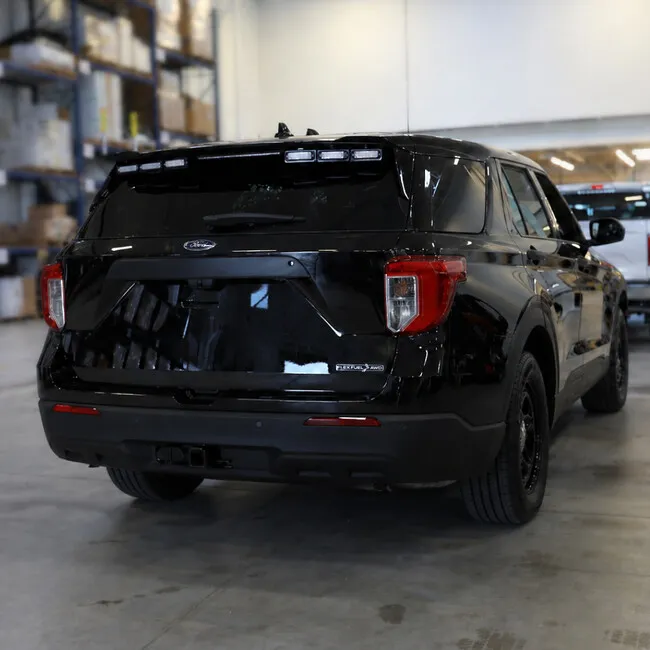
Surface-mount lights are typically mounted on the surface of the vehicle, such as the grille or the bumper, for visibility. By contrast, dash lights, also known as visor lights or deck lights, are mounted on the inside, typically on the windshield or the dashboard.
How LED Lights Improve Safety for First Responders?
Increased Visibility in Low-Light Conditions
LED lights enhance road safety for first responders by offering high visibility in low-light conditions. During conditions where visibility is compromised, having LED lights offers powerful illumination, helping first responders see clearly.
Faster Response and Communication on Roads
Apart from offering visibility for the first responders, LED lights help other motorists on the road to see their vehicles clearly from a distance. This helps in faster responses and improves communication on the road. It also helps different first responder fleets interact more effectively.
Enhanced Safety for Emergency Teams
As the vehicles are clearly visible, they also offer safety to emergency teams, such as law enforcement, from oncoming vehicles. This is a critical feature in high-traffic areas and highways.
Why LED Lights Are Essential for First Responder Vehicles?
To conclude, LED lights offer durability, energy efficiency, strong illumination, long lifespan and enhance safety on the road for first responders. This makes them an integral part of first responder fleets, and when combined with appropriate sound systems, such as sirens, it aids in performing critical tasks with optimal effectiveness.
For more information on emergency vehicle LED lights, contact us at D&R Electronics Co. Ltd. As a leading fleet solution provider in North America, the Middle East, Europe, and Australia, we offer a variety of solutions, including police sirens, LED beacons, and more. Contact us at 1-800-538-7338 for more details.
FAQs
What are LED lights used for in emergency vehicles?
LED lights are used in emergency vehicles as they improve visibility, offer safety, enhance response time and ensure better on-road communication.
How do LED strobe lights work in emergency systems?
LED strobe lights use high-intensity LED lights and flash them at intervals to grab the attention of other motorists.
Why are LED lights preferred over traditional bulbs?
LED lights are preferable over traditional bulbs as they are more durable, energy efficient and versatile.
Are LED emergency lights energy efficient?
Yes, LED emergency lights are highly energy efficient as they consume a minimal amount of electricity for operation.
What types of LED lights are used in first responder vehicles?
The different types of LED lights used in first responder vehicles include LED beacons, strobe lights, light bars, surface mount and dash lights.





 Find a Dealer