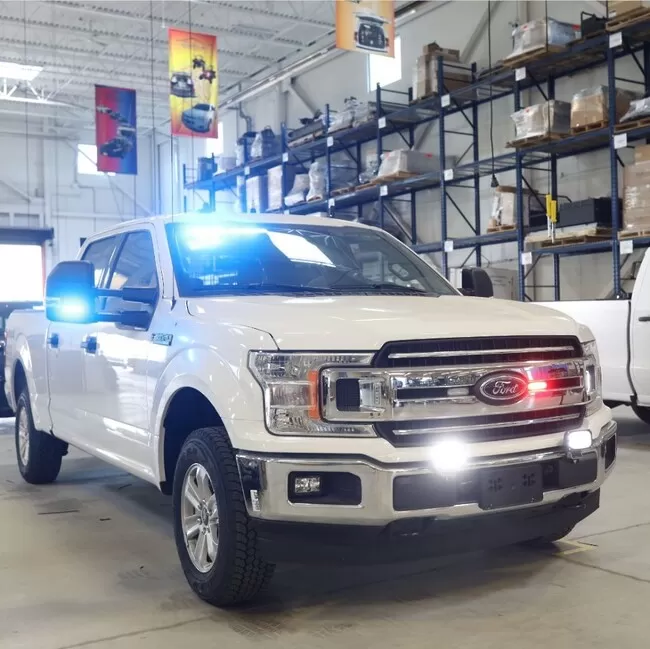
Strobe lights are an integral part of emergency vehicle LED lights that emit bright, concentrated flashes of light instead of a steady, continuous beam. In this blog, D&R Electronics Co. Ltd., a reputed fleet vehicles solution provider in Bolton, Ontario, explores the basics and working principles of LED strobe lights.
What Are Emergency Vehicle LED Strobe Lights?
Strobe lights emit very strong and concentrated flashes of light, allowing them to direct more energy to each pulse or flash. The purpose of this emergency vehicle LED strobe light is to grab the attention of other motorists across all environmental conditions, such as rain, fog, or sunlight.
There are two primary forms of strobe lights used in emergency vehicles:
- Total Internal Reflection Optics (TIR Optics): This type of strobe light focuses light into a tight beam for visibility across a long range. They are primarily used in highway response vehicles.
- Linear Spread Optics (LIN Optics): This type of strobe light diffuses light horizontally, ensuring broad coverage at intersections and work zones.
What Is The Working Principle Of Emergency Vehicle LED Strobe Lights?
The working principle of the emergency vehicle LED lights involves converting stored electricity into bright, intense flashes or pulses of light. The core components and functioning of strobe lights include:
- LED Modules: These include a collection of diodes, each emitting around 1-5 watts.
- Driver Boards: Helps control current, voltage and flash patterns.
- Optical Lens: Classified as TIR and LIN, optical lenses help amplify each signal to cover long distances or broad areas.
- Sealed Housing: These are IP-rated housings made of aluminum bases that offer protection from dust, moisture and weather exposure.
These components are combined to convert electrical signals to flashes of light of the required colour pattern and intensity.
Conclusion
To conclude, strobe lights are a key part of emergency vehicles as they emit bright, directed flashes of light.
For more details on emergency vehicle LED strobe lights, reach out to us at D&R Electronics Co. Ltd. today. As a leading fleet solution provider in North America, the Middle East, Europe, and Australia, we offer a variety of solutions, including vehicle storage cabinets, police sirens, emergency vehicle consoles, and more. Contact us at 1-800-538-7338 for more details.
FAQs:
What colours are used in strobe flashing lights for law enforcement?
Law enforcement vehicles use red and blue strobe flashing lights to alert other motorists to their presence.
What colours are used in strobe LED lights for utility vehicles?
Utility, construction and tow vehicles use amber strobe LED lights to alert motorists of ongoing work, caution or hazardous conditions.





 Find a Dealer