Emergency vehicle lighting is an integral part of a safe and effective system for first responders. In this blog, D&R Electronics Co. Ltd., a major fleet vehicle solutions manufacturer in Bolton, Ontario, explores the role of emergency vehicle lighting, major types, and best practices in detail.
Why Visibility Is Critical for Emergency Vehicles?
The Role of Visibility in Emergency Response Safety
Visibility is one of the core tenets of safety in emergency response fleets. Lighting is the key way to achieve this visibility. A combination of synchronized strobe lights, beacons, and flashing patterns is used to alert other motorists at a distance so that they can divert or stop their vehicles accordingly.
Driver Reaction Time and Visibility Distance
Another major reason why lighting plays a major role in emergency vehicle visibility requirements is its ability to impact drivers’ reaction time. Depending on when the motorist is exposed to the emergency lights, they have a limited time to process it and react accordingly. Therefore, to increase this reaction time, the LED emergency lights in police vehicles and other emergency fleets are designed to emanate intense beams of light that are visible across large distances.
Common Causes of Emergency Vehicle Roadside Accidents
Lastly, to better understand the role of lighting in ensuring the safety of emergency vehicles and personnel, it is vital to know the common causes of accidents for emergency vehicles. This includes high-speed driving or reckless driving, collisions at intersections on account of the driver not following traffic lighting, and fatigue. In a nutshell, emergency vehicle lighting is designed to avoid these situations and bolster the safety of police personnel and emergency first responders.
How Emergency Vehicle Lighting Improves Visibility?
Warning Lighting vs. Scene Lighting
Warning lights and scene lighting are two ways in which emergency vehicles, such as police cruisers, improve visibility on the road. However, there is a clear distinction between these two types of lighting. While warning lights for first responder vehicles flash to alert other motorists of their presence, scene lighting uses a steady white light to better illuminate an area so that first responders can perform their tasks properly.
Daytime vs. Nighttime Visibility Requirements
While visibility is key, there is a distinction between lighting requirements for daytime and nighttime operations in emergency vehicles. The lights used in police cruisers and other first responder vehicles are more intense during the daytime and reduce in intensity at night. This adjustment is done to avoid blindness for other motorists without compromising on optimal visibility.
Visibility In Fog, Rain, And Snow Conditions
Apart from daytime and nighttime conditions, another key consideration for emergency vehicle lighting is the environment. These lights have to ensure visibility despite challenging weather conditions such as fog, rain, or snow. Modern LED warning lights are designed with this in mind to improve visibility irrespective of weather conditions.
Types Of Emergency Vehicle Lights Used For Visibility
LED Light Bars
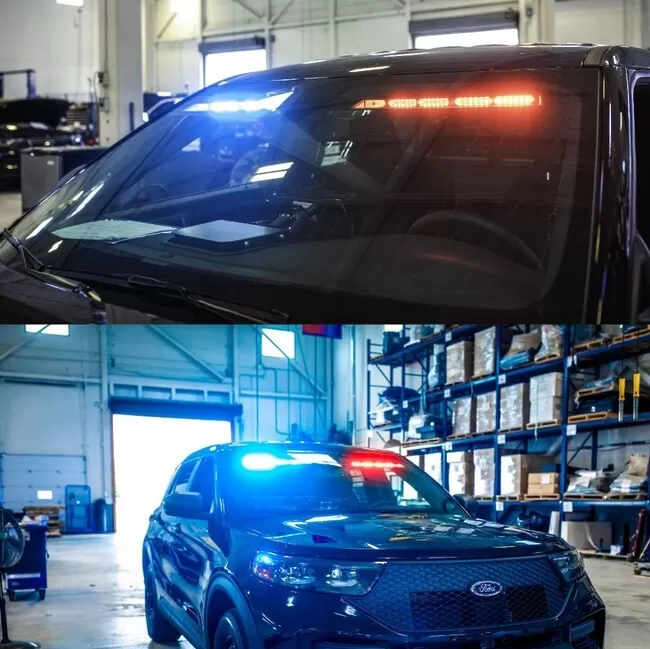
LED light bars are one of the common emergency vehicle lighting solutions for ensuring high visibility. Typically mounted atop the vehicle, it offers wide coverage, high intensity and multiple colour options. Some variations also include traffic directors to better manage vehicle influx.
Strobe Lights
LED strobe lights can be mounted either on the inside or outside of the emergency vehicle. They feature intense brightness in conjunction with multiple flash patterns. Their major pros include reduced power draw and long lifespan, making them ideal for constant usage.
Grille Lights And Hideaway Lights
These lights are different from light bars and strobe lights. Their placement is more discreet when turned off. However, they emit blinding light when turned on. These lights are typically placed in taillights, grilles, headlights, or bumpers, offering 360-degree coverage.
Dash And Visor Lights
Dash and visor lights are installed on the inside rear window or on the dashboard. Their purpose is to provide lighting for undercover operations in law enforcement or volunteer operations.
Scene And Perimeter Lighting
Scene and perimeter lighting is another type of emergency lighting system that is designed to provide high-intensity light to illuminate a certain area. They are key because different vehicle setups require multiple types of lighting systems, including a combination of warning and scene lights. The latter helps increase visibility for first responders and aids them in performing their tasks effectively.
Best Practices For Emergency Vehicle Lighting Placement
360-Degree Vehicle Visibility Strategy
For the best results, visibility is paramount. 360-degree emergency vehicle lighting ensures that the warning lights are visible from all directions. This will help prevent collisions, particularly in intersections.
Front Lighting Placement
Emergency vehicle lighting placement in the front section is key, as it ensures high visibility. To achieve this, LED lighting is installed on the roof bar or the grille.
Rear Lighting Placement
On the rear end of the vehicle, the emergency warning lights should be mounted on the extreme rear corners of the vehicle to define its boundaries and reduce the chances of collision. Another strategy is to place lights on the top, middle, and bottom of the rear end to ensure visibility across different conditions, particularly when travelling on the highway.
Side Lighting Placement
Side lighting placement is critical in emergency vehicles as it provides increased visibility on the side profile, eliminating traffic collisions in intersections.
Avoiding Blind Spots And Dark Zones
Test the visibility of the lighting from multiple angles to check for any blind spots and dark zones. This will ensure the safety of the first responders as well as other motorists on the road. Moreover, integrating lighting with other systems, such as vehicle control consoles, allows first responders to control multiple lighting systems effectively.
Regulations And Standards For Emergency Vehicle Visibility In Canada
Following regulations and standards closely ties in with best practices for installing emergency vehicle lights.
SAE Lighting Standards
Standards and regulations for emergency vehicle visibility in Canada are governed by the Motor Vehicle Safety Regulations (CMVSS). SAE lighting standards for emergency vehicles are a key part of the regulations, which state that all emergency vehicles must use SAE J845/J595 Class 1 due to their high intensity and high visibility across different weather conditions.
Province-Specific Lighting Color Regulations
When it comes to emergency vehicles, there are no province-specific lighting regulations in Canada. Rather, the lighting regulations apply to the entire country. These include:
- Red and white for ambulances
- Amber lighting for utility vehicles
- Red and blue for law enforcement vehicles across Canada
Conclusion: Building a Safer Visibility Strategy for Emergency Vehicles
In closing, visibility in emergency vehicle lighting involves a lot more than just brightness. It involves using the right colour, right intensity, proper placement, and adhering to the right standards and practices for the best results.
For more information on emergency vehicle LED lights, LED beacons, and related accessories, contact D&R Electronics Co. Ltd. today. As a leading fleet solution provider in North America, the Middle East, Europe, and Australia, we offer a variety of solutions, including vehicle storage cabinets, police sirens, emergency vehicle consoles, and more. Contact us at 1-800-538-7338 for more details
.
FAQs
What lights are required on emergency vehicles?
The most commonly used lights in emergency vehicles include red, blue, white, or amber.
How bright should emergency vehicle lights be?
Emergency vehicle lights should be bright enough to meet SAE Class 1 standards for light intensity.
What is the difference between warning lights and scene lights?
In emergency vehicles, warning lights are used to alert other motorists of their presence, whereas scene lights help first responders to clearly see and secure an area.





 Find a Dealer