Key Takeaways
Emergency LED lights are a staple in first responder vehicles for safety and functionality. For optimal performance, proper maintenance and upkeep of LED lighting is paramount. In this blog, D&R Electronics Co. Ltd., a major fleet vehicle solutions provider, such as police sirens, vehicle storage cabinets, and more, in Bolton, Ontario, explores the best ways to maintain emergency LED lights in detail.
Why Regular Maintenance Matters For Emergency LED Lights?
The Critical Role Of Emergency Lighting
Emergency lighting is a non-negotiable in first responder fleet vehicles. They facilitate clear visual communication with other motorists to demand the right of way, diversion of traffic and other functions, ensuring safety for both first responder personnel and motorists alike.
Risks Of Poorly Maintained LED Lights
Poorly maintained LED lights are a hazard, as they can fail at critical junctures and endanger the safety of first responders on the road.
How Does Maintenance Support Reliability And Safety?
Maintenance ensures that the LED lights are performing at maximum capacity, providing reliability in mission-critical environments.
Compliance And Operational Readiness Considerations
Maintenance is also key from a compliance perspective. Most LED lighting used in first responder vehicles must correspond to the highest compliance and safety standards to ensure mission readiness.
Understanding The Main Components Of Emergency LED Lighting Systems
LED Modules
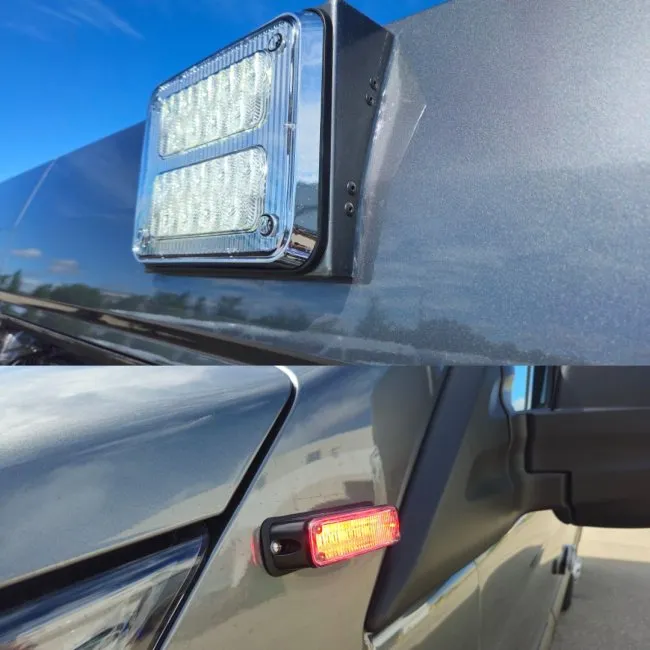
LED modules are the core of the lighting system in emergency vehicles. They comprise a collection of high-power, solid-state light-emitting diodes (LEDs) that emit the light of the required colour and intensity.
Wiring, Harnesses and Connectors
Wiring and electrical connections attach the LED modules of the lighting system to the emergency vehicle. They ensure that the electrical power from the vehicle’s battery reaches the LEDs so they can perform their required function.
Light and Siren Control Systems
Although LED modules can work independently with built-in flasher and sync. Light and Siren Control systems give wider and deeper functional control of the operational aspect. They also dictate the flashing rate of the LED lights and which lights will flash in unison or in an alternative manner. They are responsible for providing the strobe effect in emergency lighting.
Mounting Hardware And Housing
Aside from wiring, mounting hardware is the physical connection between the LED lights and the vehicles. They determine how the light is secured onto the vehicle via screws, magnetic plates, and so on. Housing protects the lighting components from the elements such as UV radiation, dust, and moisture.
Power Supply And Battery Systems
The power supply, which usually comes from the vehicle’s battery, provides ample voltage for the lights to operate safely. It is typically in the range of 9-28 VDC. However, keeping the lights on for a period can drain a car's battery below recovery. Disabling the vehicle ( unable to start up), specialised
power distribution units continually query battery voltage and shut off equipment in groups, conserving enough power to restart the vehicle.
Common Issues That Affect Emergency LED Light Performance
Reduced Brightness Output
The brightness of
emergency vehicle LED lights is its most vital feature. It enables clear visibility across large distances even in bright sunlight. However, a reduction in brightness output directly compromises this feature, posing a safety risk. Common causes include low battery voltage, battery degradation, or thermal throttling.
Water And Moisture Intrusion
Water and moisture ingress into ill-fitting or poorly designed housing enclosures can damage the inner circuitry of the LED lights. When the housing seals deteriorate, it provides ample opportunity for water and dust to enter the lights and reduce their lifespan through the terminals.
Wiring And Connection Failures
Wiring and connection failures are also commonplace, requiring constant inspection. Loose or corroded terminals are the most common reason behind this phenomenon, caused by either vibration or moisture ingress.
Physical Damage From Daily Operations
Although the most obvious, it cannot be overlooked when considering the probability of performance reduction in LED lights. The rugged nature of emergency work exposes the lights to harsh climatic conditions, constant vibrations and even direct physical impact in some cases.
Flash Pattern Malfunctions
If the light intensity is proper but the flash pattern is malfunctioning, it can also impact lighting performance. Failed LED drivers or corrosion in internal components caused by moisture ingress are the most common causes.
Routine Inspection Checklist For Emergency LED Lights
Visual Inspection Procedures
Visual inspection is a preliminary but useful method of inspecting emergency LED lights. Check for dust or moisture buildup on the surface, or signs of obvious damage or impact. Apart from visual inspection of the lenses, examine the housing and mount for cracks, corrosion, or loose connections.
Testing Light Output And Visibility
Since light output is vital for proper functioning, test it routinely to see if it meets the required criteria. If there is a marked reduction in light output or visibility, examine probable causes such as overheating or issues with the battery.
Inspecting Wiring And Connectors
Inspect the wiring conditions externally and internally. Check for fraying, cracking or pinching of the wire near the LED lighting mount. Similarly, check for signs of corrosion or looseness in the wiring terminal, as it can impact the performance of LED lights.
Checking Mounting Hardware
Make sure that all the mounting hardware is robust. This is key as the LED lights must be securely mounted onto the emergency vehicle to function as intended during mission-critical situations.
Verifying Flash Pattern Functions
Make sure that the LED drivers are working properly, as they are the most common cause of flash pattern malfunctions. Similarly, corrosion within the lighting system can also create a negative impact, so check for signs of corrosion as well.
Reviewing Environmental Damage
Environmental damage can take the form of corrosion within the internal and external components of the light due to moisture ingress or dimming of lights due to dust buildup. So make sure to regularly inspect for such damage to keep the LED lights functioning optimally.
Step-by-Step Maintenance Process for Emergency LED Lights
Step 1: Power Down the System Safely
Safety is the most important part of a maintenance protocol when it comes to emergency vehicle LED lights. Make sure that the system is powered down before beginning any type of inspection and cleaning practices.
Step 2: Clean Lenses and Light Surfaces
A brief visual inspection of the lenses and casing will reveal signs of dirt, debris, or moisture that cause visibility problems. Cleaning these components is a fairly straightforward process that can be completed with a cleaning solution. Just make sure not to use an abrasive surface while cleaning, as it can cause scratches in the lens.
Step 3: Inspect Electrical Components
Make sure that the electrical components, such as wiring, are functioning as intended. Check for obvious signs of damage such as chafing, loose connectors, heat damage, or fraying. Also ensure that the input voltage falls within the specified manufacturer’s range. Lastly, check the wire terminals for corrosion and remove them if necessary.
Step 4: Test Light Functions
Test light functions fall under different categories, namely, steady-burn, flashing, and directional patterns. Make sure that the LED lights operate properly in all these modes. Additionally, check if the lights synchronize well with other systems in the vehicle, such as
perimeter lighting and siren systems.
Step 5: Verify Mounting Security
Verify if the emergency vehicle LED lights are mounted securely to the vehicle. Check the mounts for signs of wear or looseness and reinforce them if necessary.
Step 6: Document Maintenance Activities
Lastly, document all the maintenance activities and part replacements without fail, as it provides an accurate account of fleet history and simplifies future maintenance protocols.
When To Repair Or Replace Emergency LED Lights?
Signs A Repair Is Sufficient
To know if LED lights need to be repaired or replaced, it is first important to know if a repair is sufficient. If the individual components, such as the battery pack or driver, are malfunctioning, then a repair can be a more viable option than replacement.
Indicators Of Permanent Component Failure
When components fail during safety inspection or the discharge test, replacing the component or the entire lighting system is a better option, as performance is paramount in emergency vehicles.
Evaluating Cost Versus Replacement
While the cost of repairing might seem less than outright replacement, unwanted downtime or constant repairs can add up quickly. Hence, make sure to take this into account when considering the replacement or repair of LED light components.
Conclusion: Keeping Emergency LED Lights Ready For Critical Situations
To conclude, emergency LED lights must be maintained in optimal condition to ensure reliability during critical situations for emergency or fleet utility vehicles.
To learn more about emergency LED lights and which one is right for your fleet, contact us at
D&R Electronics Co. Ltd. today. As a leading fleet solution provider in North America, the Middle East, Europe, and Australia, we offer a variety of solutions, including vehicle storage cabinets, emergency vehicle consoles,
police sirens, perimeter lighting, and more.
Contact us at 1-800-538-7338 for more details.
FAQs
How often should emergency LED lights be inspected?
Emergency LED lights must be inspected on a functional basis monthly and comprehensively annually.
Why are my emergency LED lights flickering?
Emergency vehicle LED lights can flicker due to loose or corroded wiring, a failing driver, or voltage fluctuations due to problems in the power source, which is the vehicle’s battery.
Can emergency LED lights be repaired?
Yes, if the issues are minor, it is feasible to repair emergency LED lights.





 Find a Dealer