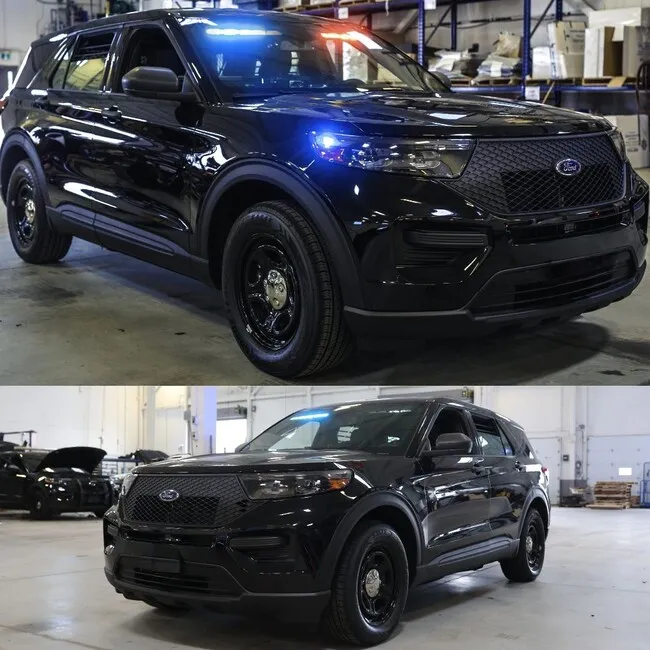
The 4 key considerations for emergency vehicle LED strobe lights include brightness level, protection against dust and moisture, flash patterns, and beam direction. D&R Electronics Co. Ltd., a reputed fleet vehicle solutions provider in Bolton, Ontario, specializing in emergency vehicle LED lights, LED beacons, police sirens, and more, explores these 4 considerations in detail in this blog.
What Are The Major Considerations For Emergency Vehicle LED Strobe Lights?
Brightness Level
Brightness level is a key factor as it determines visibility and compliance. For first responders, SAE Class 1 lights are the right choice. They facilitate usage on highways and in highway and emergencies. SAE Class 2 lights, on the other hand, are ideal for work zones.
Protection Against The Elements
The emergency vehicle LED strobe lights must offer durability against environmental conditions such as dust and moisture. To ensure this, the lighting must have IP 67 (a device is completely protected against dust (dust-tight) and can withstand temporary immersion in water up to 1 meter deep for up to 30 minutes) and IP 68 (guarantees complete protection against dust (level 6) and allows for, at minimum, immersion in water deeper than 1 meter (level 8), usually up to 1.5 meters for 30 minutes) ratings, respectively. This will offer the emergency vehicle LED lights protection from dust and moisture for short time periods.
Flash Patterns
Flash patterns are critical as they aid first responders in signifying different situations to motorists. Examples include flash patterns that indicate traffic control or redirection versus warning/caution. Quality emergency vehicle LED strobe lights have multiple flash patterns to aid in this purpose.
Beam Direction
Does the emergency vehicle require long-distance visibility or broad area coverage? In the case of the former, Total Internal Reflection (TIR) strobe lights are suitable. For the latter, Linear Spread (LIN) lighting is preferred. Click here to learn more about TIR and LIN lighting.
Conclusion
To conclude, emergency vehicle LED strobe light selection requires focus on brightness level, protection against dust and moisture, flash patterns, and beam direction.
For more information on emergency vehicle LED lights, contact us at D&R Electronics Co. Ltd. As a leading fleet solution provider in North America, the Middle East, Europe, and Australia, we offer a variety of solutions, including police sirens, LED beacons, and more. Contact us at 1-800-538-7338 for more details.
FAQs:
What are the different types of vehicle strobe lights?
Different types of LED strobe lights include LED grilled lights, interior dash lights, deck lights, full-size LED light bars, mini light bars, visor lights, and hideaway lights.
What is the difference between emergency vehicle LED strobe lights and warning lights?
Emergency vehicle LED strobe lights emit intense, frequent flashes of light, whereas warning lights use more steady, rotating patterns for high visibility.





 Find a Dealer