Key Takeaways
LED beacons are a core component of emergency vehicles and utility fleets. To choose the right one for a specific application, it is vital first to understand the functions and uses of LED beacons. In this blog, D&R Electronics Co. Ltd., a leading fleet vehicle solutions provider, including vehicle storage cabinets, police sirens, power distribution units, and more, explores the basics of LED beacons and selection criteria in detail.
What Are LED Beacons And Why Are They Important?
Understanding The Purpose Of LED Beacons
LED beacons play a major role in emergency vehicles as they offer high visibility under all conditions, ensuring the safety of first responders and other motorists on the road.
How Do LED Beacons Improve Vehicle Visibility?
LED beacons are designed to be visible from long distances and can be programmed to flash or rotate for additional visual impact.
Industries That Rely On LED Beacon Lights
LED beacons are mainly used in emergency vehicle fleets and roadside utility trucks.
Why Has LED Technology Replaced Traditional Beacon Lights?
As the name suggests, LED technology is the core component of LED beacons. They provide reliable, 360-degree visibility efficiently, making it an essential solution for emergency, utility, and commercial fleets.
How Do LED Beacons Work?
Light-Emitting Diode (LED) Technology
Light-emitting diode (LED) is the basis of all LED beacons used in emergency vehicles. It uses semiconductors that emit light when electricity is passed through them.
Flash Patterns And Visibility Principles
Instead of using spinning motors or a rotating bulb like conventional halogen lights, LED beacons use circuit boards to switch on and off to create the effect of flashing or strobe lights.
Lens Design And Light Distribution
The lens plays a key role in LED beacons. The light emitted from the diodes passes through the lens, which in turn, magnifies the light and directs it outward to create specific patterns.
Power Consumption And Electrical Efficiency
Compared to older technologies, LED beacons are highly efficient, consuming less power to deliver optimal performance. They also have a longer lifespan than traditional halogen lights.
Weather Resistance And Durability
LED beacons are weather-resistant and durable due to the external housing. This is a sealed, epoxy-filled outer shell that protects the electronic components from dust, moisture, and vibration.
Key Functions Of LED Beacons
Increasing Vehicle Visibility
The biggest function of LED beacons is ensuring high visibility across long distances. This holds true even for low-visibility or dangerous weather conditions.
Warning Motorists And Pedestrians
Through high visibility, the beacons serve the purpose of visually alerting other motorists and pedestrians. So whether the emergency vehicle is stationary or moving, other motorists are aware of their position at all times.
Supporting Safe Roadside Operations
In utility fleet trucks, LED beacons help them perform roadside operations safely. Be it minor repairs or major roadside construction, the beacons alert other motorists of the location of the utility crew at all times.
Improving Awareness In Low-Light Conditions
In low-light conditions or foggy weather, the LED beacons still ensure clear visibility for maximum awareness. The 360-degree visibility feature of the beacons further aids in this goal.
Enhancing Work Zone Safety
In roadside work zones, the beacons also alert other fleet trucks or vehicles of their presence, ensuring clear visual communication. This aids in improving work zone safety.
Reducing Accident Risks
In highways and high-traffic urban environments, lack of clear visibility can result in collisions. LED beacons play a major role in reducing these potential accident risks.
Common Applications Of LED Beacons
Police And Law Enforcement Vehicles
In police cruisers, LED beacons are a staple in the form of steady or flashing red and blue lights. They use them to navigate traffic, communicate visually with other vehicles, and alert them of their presence.
Fire And Rescue Apparatus
In fire and rescue trucks and associated apparatuses, LED beacons offer 360-degree visibility to enable right of way in high-traffic areas so they can reach their destination quickly.
Ambulances And Emergency Medical Services
Ambulances are required to reach hospitals as quickly as possible during emergencies. They use LED beacons for this purpose in conjunction with sirens to alert other motorists to move out of the way and provide a clear, unobstructed path.
Utility And Municipal Service Vehicles
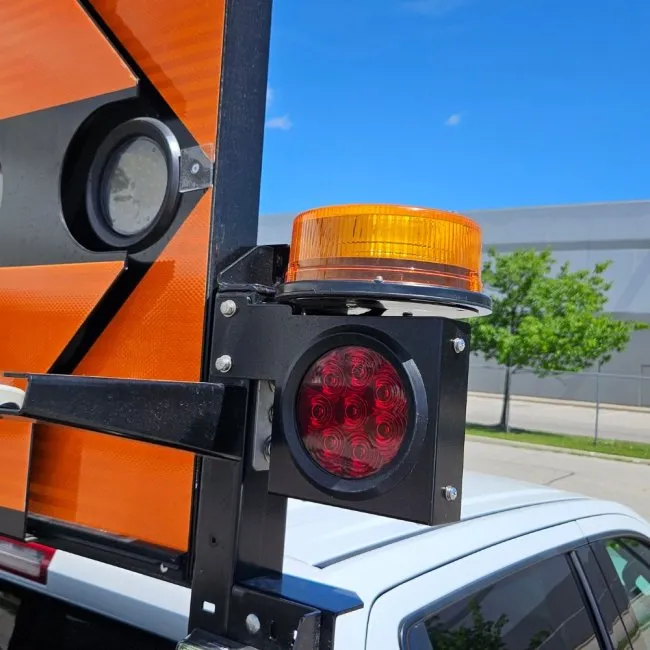
Utility and municipal service vehicles primarily use LED beacons in the form of amber lights to inform motorists and pedestrians of their presence and their designated work area. This helps keep the crew safe and free from traffic collisions.
Construction And Road Maintenance Fleets
Similar to utility fleets, construction and roadside maintenance crews use steady or flashing LED beacons on their vehicles to alert other motorists of ongoing work. Tow trucks and recovery vehicles on the highway also operate on a similar principle.
Agricultural And Industrial Equipment
Agricultural and heavy-duty industrial equipment are also mandated to use LED beacons to let others know of their presence and operations.
How To Choose The Right LED Beacon
Identify The Vehicle Application
The first step involves identifying the application of the vehicle where it is meant to be installed. For instance, in the case of emergency vehicles, the beacons must be high in intensity and use flashing patterns. Alternatively, utility and construction sites require steady-burning, bright LED beacons.
Select The Appropriate Mounting Style
Once the application has been determined, consider the mounting style of the LED beacons. Should they be mounted on top of the vehicle for maximum 360-degree visibility, or should they be installed on mirrors or grilles for low-angle visibility? The purpose of the light will further determine the mounting style and configuration.
Choose The Correct Flash Pattern
Make sure that the LED beacons can display different flash patterns, such as strobe or rotating. The ability to switch between different flash patterns determines the utility of the beacons.
Evaluate Brightness and Viewing Angles
Consider the brightness/intensity of the LED beacons and their visibility. Most emergency vehicles use SAE Class 1 beacons as they have the highest brightness. Additionally, the lights must be visible past different weather conditions such as rain and fog.
Consider Ingress Protection (IP) Ratings
The LED beacon housing must offer protection from basic dust and moisture for prolonged operation. So consider the right Ingress Protection (IP) rating that can ensure its durability and functionality.
Verify Regulatory And Fleet Requirements
Regulatory verification and compliance are perhaps the most vital consideration. For example, SAE Class 1 and IP67 are a must for LED beacons used in emergency vehicle operations.
Installation And Placement Best Practices
Selecting The Optimal Mounting Location
The mounting location is vital for LED beacons as it can impact their effectiveness. For maximum visibility, it is best to install them at the top of the vehicle. Also, make sure to install them properly with mounting brackets so that vibrations do not knock them off.
Preventing Visibility Obstructions
Since visibility is the most key consideration for LED beacons, make sure that the installation does not obstruct their visibility in any way. For some vehicles, it might mean installing the lights at the top corner instead of the centre, for instance.
Wiring And Power Considerations
During installation, make sure that the wiring connections are secure and insulated. Also, ensure that the power source of the lights is compatible with the vehicle.
Routine Function Testing After Installation
After installation, check routinely to make sure that the LED beacons are functioning as intended and there is no drop in brightness.
Maintenance Tips to Maximize LED Beacon Performance
Cleaning Lenses Regularly
Make sure that the lenses are cleaned regularly to remove dust and moisture to maintain brightness.
Inspecting Wiring Connections
Check the wiring routinely for signs of loose connections or wear in insulation. Get them replaced promptly in case of the above-mentioned conditions.
Testing Flash Patterns
Test the flash patterns of the LED beacons regularly to ensure their proper functioning.
Checking Mounting Hardware
Make sure that the mounting hardware is secure and free from wear. Replace them promptly in case of wear.
Replacing Damaged Components Promptly
In case of dimness, check the LEDs and other components for signs of damage and replace them immediately.
Conclusion: Selecting LED Beacons That Improve Fleet Safety
To conclude, choosing the right LED beacons requires a deep knowledge of basic functionality, components, applications, compliance requirements, mounting configurations, and more. Apart from selection and proper installation, routine maintenance also goes a long way towards ensuring longevity.
For more information on LED beacons, reach out to us at D&R Electronics Co. Ltd. today. As a leading fleet solution provider in North America, the Middle East, Europe, and Australia, we offer a variety of solutions ranging from LED beacons, vehicle storage cabinets, and police sirens to emergency vehicle consoles and more. Contact us at 1-800-538-7338 for more information.
FAQs
What are LED beacons used for?
LED beacons are used to alert other motorists through high visibility under all conditions.
How do I choose the right LED beacon?
Choosing the right LED beacon depends on numerous factors such as application, visibility requirement, flash pattern functionality, quality compliance requirements, and durability.
What mounting options are available for LED beacons?
LED beacons can be mounted via a magnet, suction cup, pipe or rack.
Are LED beacons waterproof?
Yes, the housing of the LED beacons is designed to offer protection from moisture. However, this ultimately depends on their IP rating.
How long do LED beacon lights typically last?
LED beacons can typically last between 30,000 and 50,000 hours, depending on usage.





 Find a Dealer